

Dihydrotestosterone (DHT): Beyond Hair Loss — Key Regulator Across Multiple Disease Pathways
Cloud-Clone delivers optimized assay solutions to address major technical hurdles for androgen-related research
HUSTON, TX, UNITED STATES, October 20, 2026 /EINPresswire.com/ -- For life‑science researchers studying endocrinology, dermatology, reproductive biology, metabolism and pre‑clinical pharmacology, dihydrotestosterone (DHT) represents far more than the well‑known driver of hair loss. This potent androgen controls wide‑ranging physiological and pathological mechanisms across human and animal tissues, yet obtaining consistent, trustworthy DHT measurements continues to frustrate lab teams around the globe. To help investigators overcome common measurement barriers stemming from low analyte concentrations, molecular cross‑reactivity and complex sample‑matrix noise, Cloud‑Clone has released a new technical overview that unpacks DHT biology and evaluates available detection approaches, alongside its purpose‑built competitive‑ELISA kit designed to generate reproducible data for animal modelling, mechanistic exploration and candidate‑drug efficacy assessment. The resource is intended for researchers at academic labs, research institutions and translational facilities worldwide.
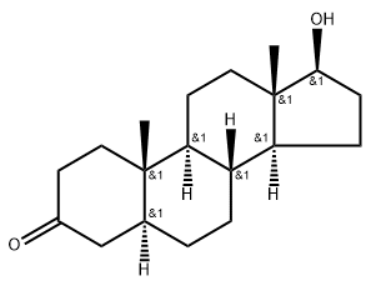
Figure 1: Molecular structural formula of dihydrotestosterone (DHT)
Circulating testosterone, the most abundant androgen, exhibits limited binding affinity for the androgen receptor (AR). After reaching peripheral tissues, testosterone is converted into DHT catalyzed by 5α-reductase isoenzymes. DHT binds AR with approximately 25-fold higher affinity compared with testosterone. The hormone-receptor complex translocates into cell nuclei and binds androgen-response elements to modulate transcription of downstream target genes. Most DHT is produced via local peripheral conversion rather than direct gonadal secretion. Skin, prostate, sebaceous glands, hair follicles and adipose tissue show high 5α-reductase expression. This local synthesis explains clinical observations: subjects with normal circulating testosterone may still develop alopecia or acne triggered by excess tissue-specific DHT.
DHT plays irreplaceable roles throughout the whole life cycle. During embryogenesis, it directs differentiation and maturation of male external genitalia. In adulthood, it sustains prostate tissue homeostasis, sebaceous gland activity, body-hair patterning and anabolic maintenance of skeletal muscle. Females also generate physiologically relevant DHT converted from ovarian- and adrenal-derived testosterone, supporting skin metabolism and endocrine balance.
Dysregulated DHT levels drive diverse pathological conditions. Excessive DHT contributes to androgenetic alopecia, benign prostatic hyperplasia, severe acne and seborrheic dermatitis in males. In females, elevated DHT serves as a key pathological marker for polycystic ovary syndrome (PCOS), accompanied by hirsutism, refractory acne and ovulatory dysfunction. Insufficient DHT may result in gonadal developmental defects, reduced libido and loss of skeletal-muscle mass. Growing evidence connects DHT with fat redistribution, insulin sensitivity, cardiovascular homeostasis and progression of certain hormone-dependent tumours. As DHT-related research expands, stable quantification of DHT in biological samples has become a frequent experimental bottleneck for many research groups.
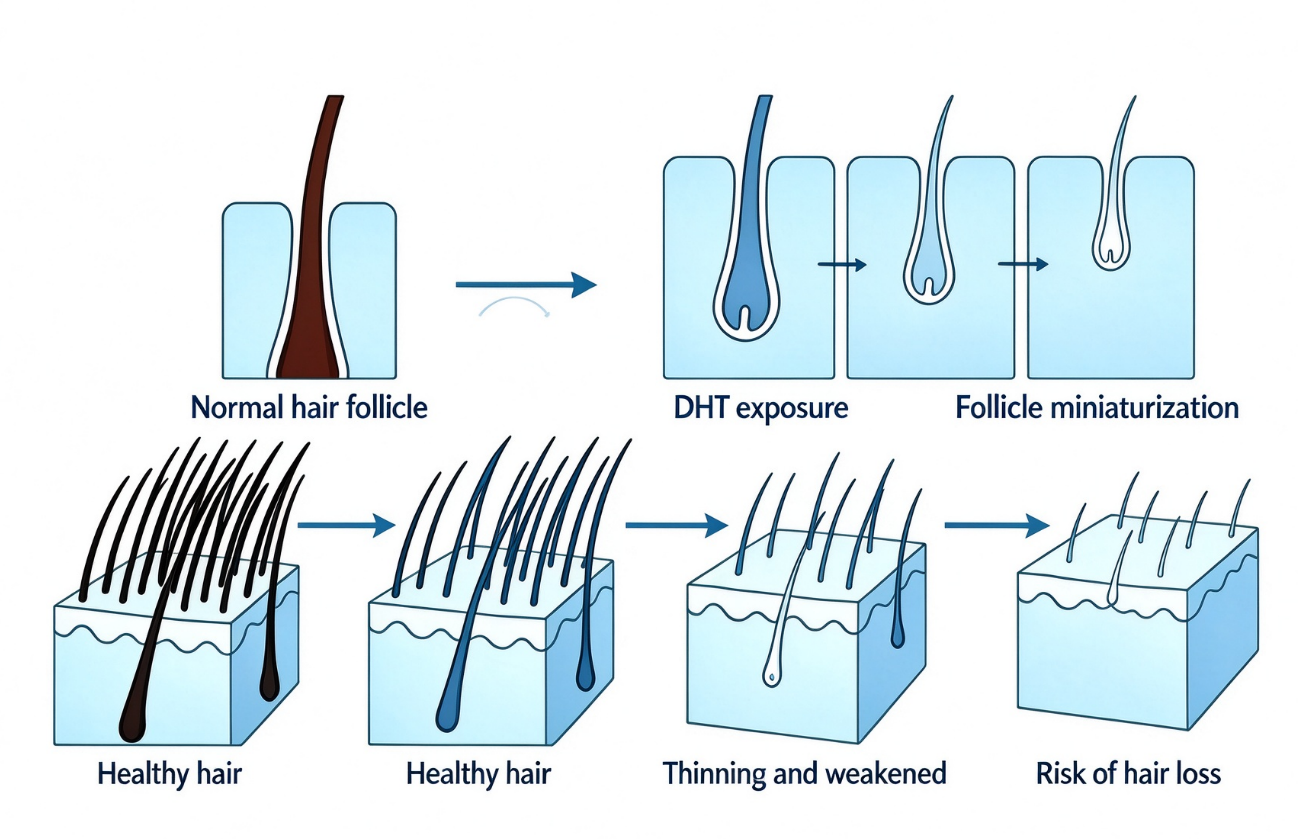
Figure 2 : Schematic diagram illustrating hair-follicle miniaturization induced by DHT exposure
Measuring DHT presents multiple inherent technical challenges. As a steroid small-molecule present at pg-to-ng concentration ranges, DHT demands high assay sensitivity, especially for female specimens. Highly homologous endogenous androgens including testosterone and androstenedione frequently cause antibody cross-reactivity, producing falsely elevated readings. Many commercial assays are originally validated for human clinical serum and demonstrate poor reproducibility when applied to mouse and rat model samples. In addition, DHT tends to adsorb onto tube surfaces; repeated freeze-thaw cycles and improper storage induce analyte loss and introduce extra experimental deviation. Researchers often face large replicate variation, inconsistent batch-to-batch results and non-significant statistical differences between study groups.
Three major analytical approaches are widely adopted for DHT quantification. LC-MS/MS acts as the gold-standard method for steroid-hormone detection. It separates structurally similar analytes via chromatography and achieves precise identification according to mass-to-charge ratios, eliminating cross-reactivity interferences. Multiple steroid molecules can be quantified within one single run, ideal for small-sample confirmatory testing. However, high instrument and maintenance costs, labor-intensive sample pre-treatment and long turnaround times restrict its suitability for high-throughput screening of large animal-experiment cohorts.
Radioimmunoassay (RIA) historically offered good sensitivity for androgen detection. Yet radioactive-isotope handling requires specialized laboratory safety qualifications. Short reagent shelf-life and complex administrative requirements make RIA less favoured in contemporary basic research.
Competitive-ELISA represents the most prevalent solution for basic-science laboratories. It requires only standard microplate readers, supports high-throughput processing of serum, plasma and tissue homogenate samples and minimizes manual pre-processing errors. Assay performance heavily depends on antibody quality. Superior antibodies minimize cross-reactivity against homologous androgens, together with tight intra-assay and inter-assay coefficients of variation to guarantee reliable data output.
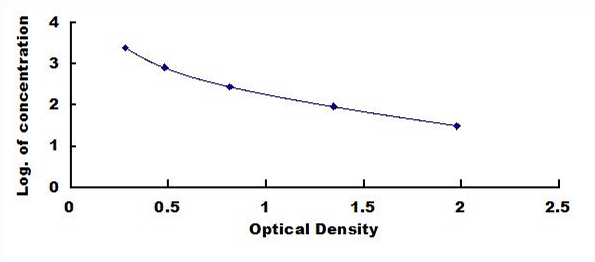
Figure 3: Representative standard curve of DHT competitive-ELISA assay
To resolve these technical pain-points, Cloud-Clone has developed the competitive-ELISA kit for dihydrotestosterone (Catalog No. CEA443Ge). Validated across human, mouse and rat matrices, this kit supports serum, plasma and tissue-homogenate specimens. Optimized antibody pairing lowers cross-reactivity from structurally-related androgens with strictly controlled intra- and inter-batch variation, supporting androgen-mechanism exploration, in-vivo drug efficacy evaluation and phenotypic analysis of animal disease models.
Applicable research scenarios cover multiple disciplines: - Urology: Prostate-disease mechanistic studies using animal models to profile circulating and tissue-resident DHT; - Dermatology: Pharmacological assessment for androgen-driven alopecia and acne, monitoring DHT shifts in skin and peripheral circulation; - Endocrine metabolism: PCOS animal-model studies and evaluation of hormone-targeting therapeutic candidates; - Pharmacology: In-vivo potency testing for 5α-reductase inhibitors and androgen-receptor modulators; - Reproductive biology: Investigations of sex-hormone-axis dynamics across developmental stages; - Metabolic research: Interplay between DHT, adipogenesis and insulin resistance in obesity-related animal models.
Several research expansion directions are worth noting for investigators. Researchers may dissect 5α-reductase isoform-specific regulation of local DHT generation under inflammatory or metabolic perturbations. Bidirectional crosstalk between DHT and adipocyte biology creates promising research opportunities for metabolic-disorder studies. For dermatological drug testing, combining phenotypic observation with quantitative DHT measurement strengthens mechanistic evidence. Including both male and female animals in study designs helps uncover sex-specific differences in androgen signalling. Joint detection of DHT alongside testosterone and SHBG differentiates total hormone concentration from bio-available free-DHT levels and enriches research outputs. Rigorous sample handling, including prompt processing, aliquoting and low-temperature storage, avoids avoidable measurement drift caused by sample degradation.
Dihydrotestosterone is far more than the well-known “hair-loss-related hormone”. This potent androgen participates in physiological and pathological processes spanning reproduction, dermatology, prostate health and whole-body metabolism. DHT quantification faces intrinsic obstacles including low analyte abundance, structural homology interferences and matrix-specific complications. LC-MS/MS delivers superior specificity yet lacks high-throughput capacity, while competitive-ELISA offers cost-effective, scalable screening for large-scale basic-research sample cohorts. These two methodologies can complement each other according to experimental scale and laboratory resources. Reliable assay reagents, standardized sample management and appropriate technical-strategy selection jointly underpin reproducible experimental results. Moving past oversimplified perceptions of DHT will unlock abundant new research opportunities across global androgen-focused research communities.
Cloud-Clone continues to refine small-molecule steroid-hormone assay tools to mitigate technical barriers and support researchers in generating robust, publishable findings for mechanistic exploration and pre-clinical drug evaluation.
About Cloud-Clone Corp.
Cloud-Clone Corp. is dedicated to the development and production of high-quality immunoassay reagents and detection solutions. With a focus on antibody engineering, multiplex assay development, and cross-platform compatibility, the company provides research tools designed to support precision medicine and advanced biomedical investigation globally. Our core products and services include the research and development of proteins, antibodies, ELISA kits, primary cells, and multiplex cytokine assay kits, as well as professional CRO services to fully meet the diverse needs of biomedical research and related fields.
For more information about Cloud-Clone Corp, visit www.cloud-clone.com.
CLOUD-CLONE CORP.(CCC)
Tel: 001-832-538-0970, 0086-27-8425-9552
Email: mail@cloud-clone.com, sales@cloud-clone.us
Visit us on social media:
LinkedIn: https://www.linkedin.com/company/cloud-clone-corp/
Instagram: https://www.instagram.com/cloudclonecorp2023/
TickTok: https://www.tiktok.com/@cloudclonecorp2026
SuKi Duan
CLOUD-CLONE CORP.WUHAN
Visit us on social media:
LinkedIn
Instagram
TikTok
X
Legal Disclaimer:
EIN Presswire provides this news content "as is" without warranty of any kind. We do not accept any responsibility or liability for the accuracy, content, images, videos, licenses, completeness, legality, or reliability of the information contained in this article. If you have any complaints or copyright issues related to this article, kindly contact the author above.
