

The Brookbush Institute Publishes a NEW Article: 'Femur Length and Squat Form'
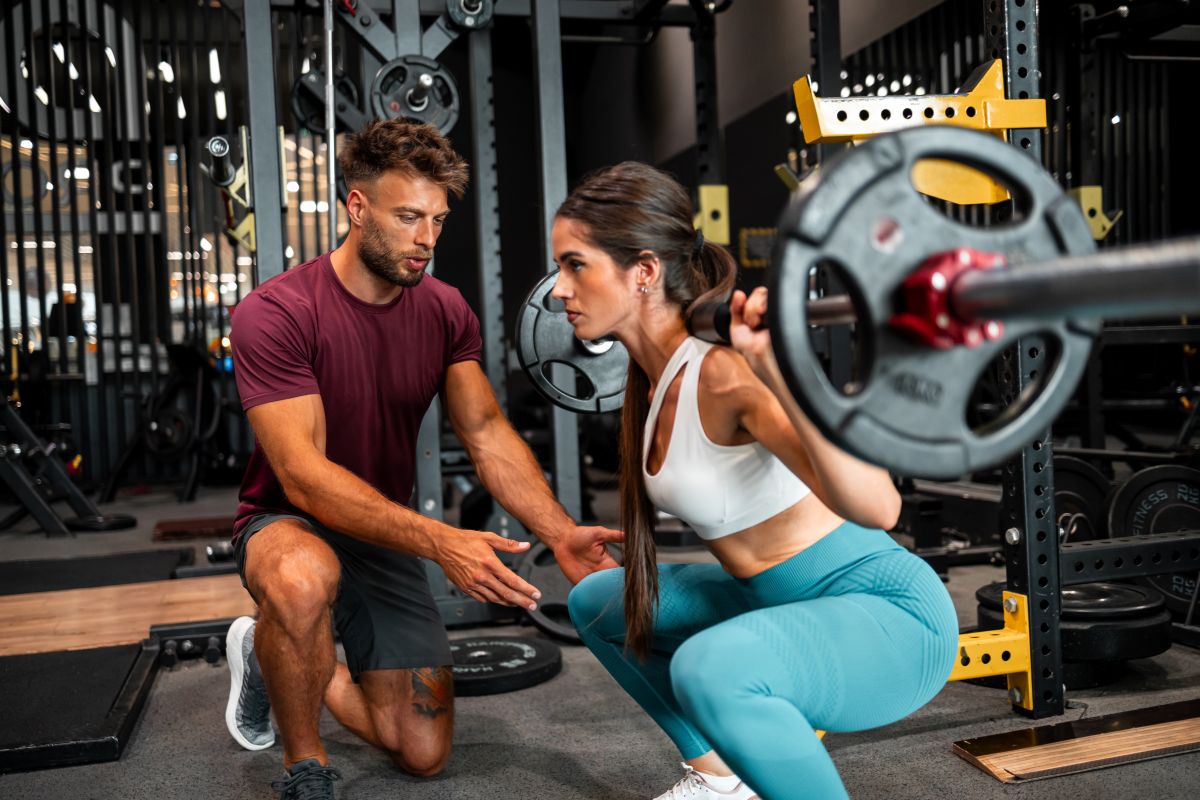
Femur Length and Squat Form - https://brookbushinstitute.com/articles/femur-length-and-squat-form
The Brookbush Institute continues to enhance education with new articles, new courses, a modern glossary, an AI Tutor, and a client program generator.
- Additional Article: Hip Anatomy and Squat Form
- Related Article: Squat Depth Recommendations: Based on All Available Research
Abstract:
Background: In fitness and rehabilitation settings, poor squat mechanics are often attributed to “long femurs,” with the assumption that disproportionate femur length causes excessive forward trunk lean, inability to reach depth, or lumbopelvic flexion during squatting. This explanation is widely repeated, but may oversimplify the relationship between anatomy and movement.
Objective: To evaluate whether femur length, particularly relative femur proportions, is a primary determinant of squat mechanics, and to contrast the influence of anthropometric factors with modifiable contributors such as ankle dorsiflexion, movement control, and stance width.
Methods: This article presents a narrative synthesis of anthropometric, forensic, and biomechanical studies examining femur length relative to stature, segment length and squat kinematics, lumbopelvic flexion during back squats, and the effects of stance width on lower-extremity range-of-motion demands. Practical implications for assessment and corrective exercise are also discussed.
Findings: Evidence reviewed in the article suggests that femur length scales predictably with height and that substantial deviations in femur proportion are likely very uncommon. Longer absolute segment lengths may increase mechanical work, knee extensor torque demands, and forward trunk lean during squatting, which may help explain why taller lifters often perceive squats as more challenging. However, relative anthropometric measures do not appear to be the primary driver of lumbopelvic flexion or other common squat faults. Instead, limited ankle dorsiflexion, suboptimal movement control, and stance width appear more strongly associated with impaired squat mechanics. Widening stance width may reduce ankle and knee range-of-motion demands in individuals with larger thigh-to-shank ratios, while corrective strategies targeting mobility and neuromuscular control may offer more practical benefit than attributing dysfunction solely to skeletal structure.
Conclusion: The claim that “long femurs” are a primary cause of poor squat form is not well supported by the evidence summarized in this article. Although absolute limb length may influence squat strategy and loading demands, modifiable factors appear more relevant for most individuals. Assessment and intervention should prioritize ankle mobility, motor control, and stance selection before concluding that skeletal anatomy is the limiting factor.
FOR THE FULL ARTICLE, FOLLOW THE LINK...
Brent Brookbush
Brookbush Institute
+ +1 2012069665 ext.
email us here
Visit us on social media:
LinkedIn
Instagram
Facebook
YouTube
TikTok
X
Other
Legal Disclaimer:
EIN Presswire provides this news content "as is" without warranty of any kind. We do not accept any responsibility or liability for the accuracy, content, images, videos, licenses, completeness, legality, or reliability of the information contained in this article. If you have any complaints or copyright issues related to this article, kindly contact the author above.
